

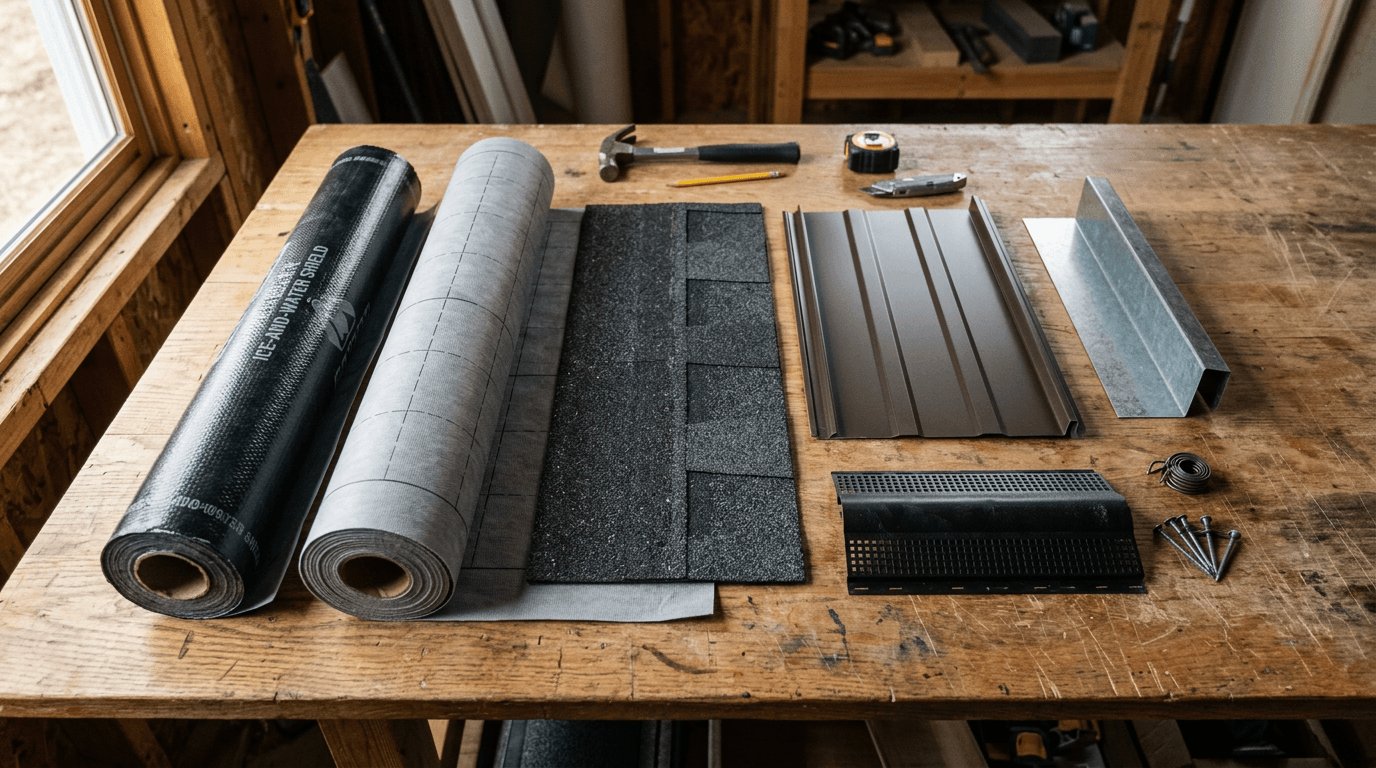
The Midwest Is Uniquely Harsh on Roofs
Roofing materials that perform well in mild climates often fall short in the Midwest. Our region delivers a punishing combination of extreme temperature swings (from -10°F to 95°F), heavy snow loads, ice dams, severe thunderstorms, and frequent hail events. The material you choose needs to handle all of it — not just one season.
This guide breaks down the most common residential roofing options and how each performs under Midwest conditions.
Asphalt Architectural Shingles
Best for: Most residential homes Lifespan: 25–30 years Cost: $$
Architectural (dimensional) shingles are the most popular choice in the Chicago suburbs for good reason. They offer strong wind resistance (rated up to 130 mph), reasonable hail performance, and a wide range of color and profile options.
Midwest advantages:
- Class 3 or Class 4 impact ratings available for hail-prone areas
- Good thermal performance with proper underlayment and ventilation
- Insurance companies often offer premium discounts for Class 4 (impact-resistant) shingles
Considerations:
- Lower-tier products lose granules faster in freeze-thaw cycles
- Dark colors absorb more heat, accelerating aging on south-facing slopes
- Quality varies significantly between manufacturers — stick with CertainTeed, GAF, or Owens Corning
Metal Roofing (Standing Seam)
Best for: Homeowners planning to stay long-term Lifespan: 40–60 years Cost: $$$$
Standing seam metal roofs are gaining popularity in the Midwest thanks to their exceptional longevity and snow-shedding properties. The interlocking panel design creates a watertight surface with no exposed fasteners.
Midwest advantages:
- Snow slides off steep metal panels, reducing ice dam risk
- Handles extreme temperature swings without cracking or splitting
- Highly wind-resistant — panels lock together mechanically
- Energy-efficient — reflective coatings reduce cooling costs in summer
Considerations:
- Higher upfront cost (2–3x asphalt)
- Can dent from large hail, though most dents are cosmetic, not functional
- Requires specialized installation — not all roofing crews are qualified
Synthetic Slate and Shake (DaVinci, CertainTeed)
Best for: Upscale homes, historical aesthetics Lifespan: 50+ years Cost: $$$$
Synthetic slate and shake products replicate the appearance of natural materials with dramatically better performance. DaVinci Roofscapes, for example, offers Class 4 impact resistance and 110 mph wind ratings standard.
Midwest advantages:
- Class 4 impact rating handles hail without cracking
- Won't absorb moisture, eliminating freeze-thaw splitting
- Lightweight compared to natural slate — no structural reinforcement needed
- UV-stable polymer construction resists color fading
Considerations:
- Premium pricing comparable to metal
- Fewer local contractors are experienced with installation
- Color selection is more limited than asphalt
Free Roof Inspection — No Obligation
Culture Construction is GAF Master Elite certified and headquartered in Elmhurst, IL. Same-week inspections across DuPage, Cook, and Will County.
Wood Shake
Best for: Aesthetic preference only Lifespan: 15–25 years Cost: $$$
Real wood shake has a distinctive appearance, but it's increasingly impractical for Midwest applications. Wood absorbs moisture, splits in freeze-thaw conditions, and has poor fire resistance.
Our recommendation: If you love the wood shake look, a synthetic alternative (DaVinci Bellaforté Shake) delivers the aesthetic without the maintenance burden or performance compromises.
How to Decide
Ask these three questions:
- How long will you own this home? If 10+ years, investing in metal or synthetic pays back through longevity and reduced maintenance.
- Is your area hail-prone? If yes, prioritize Class 4 impact-rated materials — your insurance savings alone may offset the premium.
- What's your total budget? Include not just material and labor, but projected maintenance and expected lifespan. A $12,000 asphalt roof lasting 25 years costs more per year than a $24,000 metal roof lasting 50 years.
We Help You Choose
Culture Construction is certified to install all of these systems. We'll evaluate your home's structure, your local weather exposure, your insurance requirements, and your budget to recommend the best fit — not just the most expensive option.