

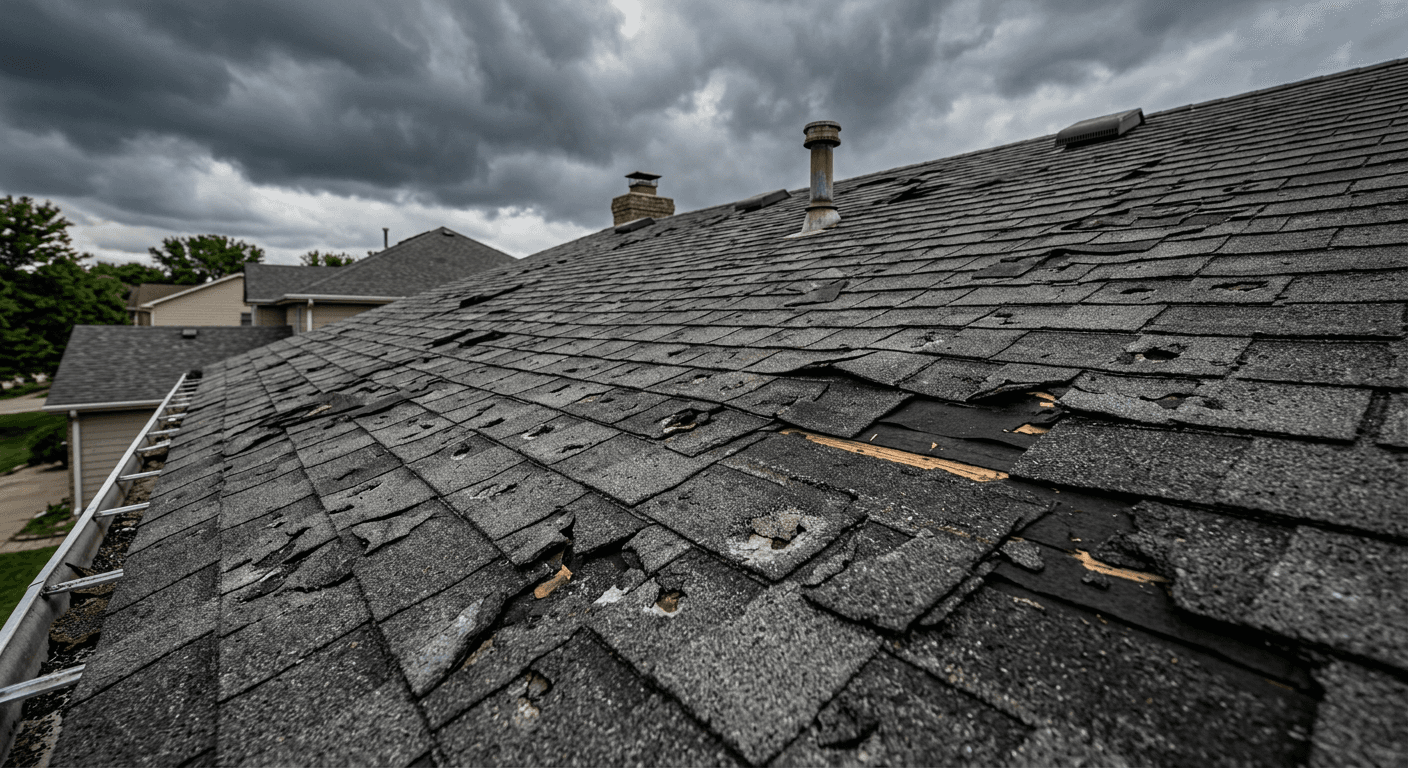
Why Storm Damage Often Goes Unnoticed
Severe weather — hail, high winds, and driving rain — can compromise your roof in ways that aren't visible from the ground. Many homeowners assume that if there are no leaks inside the home, the roof must be fine. Unfortunately, storm damage is often subtle and progressive, meaning a small issue today can become a major structural problem within months.
Here are five signs that your roof may have sustained storm damage and needs a professional inspection.
1. Missing, Cracked, or Curling Shingles
After a storm, walk around your property and look up at the roofline. Missing shingles are the most obvious indicator, but also watch for shingles that appear cracked, buckled, or curled at the edges. Wind can lift shingles just enough to break their seal without tearing them off entirely, leaving your roof vulnerable to water infiltration.
What to do: If you spot any irregularities, avoid climbing onto the roof yourself. Contact a certified roofing inspector who can safely evaluate the damage and document findings for your insurance claim.
2. Granule Loss in Gutters
Asphalt shingles are coated with granules that protect against UV exposure and weathering. Hail impacts knock these granules loose, and they collect in your gutters and downspout discharge areas. After a storm, check your gutters for an unusual amount of dark, sand-like material.
Pro tip: Some granule loss is normal on newer roofs during the first year. However, a sudden spike in granules after a storm is a clear sign of hail damage that should be documented immediately.
3. Dented Gutters, Vents, or Flashing
Metal components are reliable hail indicators. If your gutters, roof vents, pipe boots, or flashing show dents or dings, the shingles in those same areas almost certainly sustained impact damage as well. Insurance adjusters often use gutter denting as corroborating evidence for a hail claim.
Free Roof Inspection — No Obligation
Culture Construction is GAF Master Elite certified and headquartered in Elmhurst, IL. Same-week inspections across DuPage, Cook, and Will County.
4. Water Stains on Ceilings or Walls
Check your attic and upper-floor ceilings after any severe weather event. Water stains — even small, faint discoloration — indicate that moisture is penetrating the roof system. By the time a stain is visible inside the home, the underlayment and decking may already have water damage.
Warning signs to watch for:
- Yellowish or brown rings on ceiling drywall
- Peeling paint or bubbling wallpaper near the roofline
- Musty odors in the attic
- Daylight visible through the roof decking
5. Increased Energy Bills
A compromised roof allows conditioned air to escape and outside air to infiltrate. If your heating or cooling bills spike unexpectedly after a storm, your roof's thermal barrier may be damaged. This is especially common when wind lifts sections of underlayment or displaces insulation in the attic.
What to Do Next
If you notice any of these signs, the most important step is to schedule a professional inspection within 48 hours of the storm event. Timely documentation is critical for insurance claims — most carriers require damage reports within a specific window.
At Culture Construction, our inspectors provide detailed photo documentation, scope assessments, and insurance-ready reports at no cost. We work directly with your adjuster to streamline the claims process so you can focus on your family, not paperwork.