

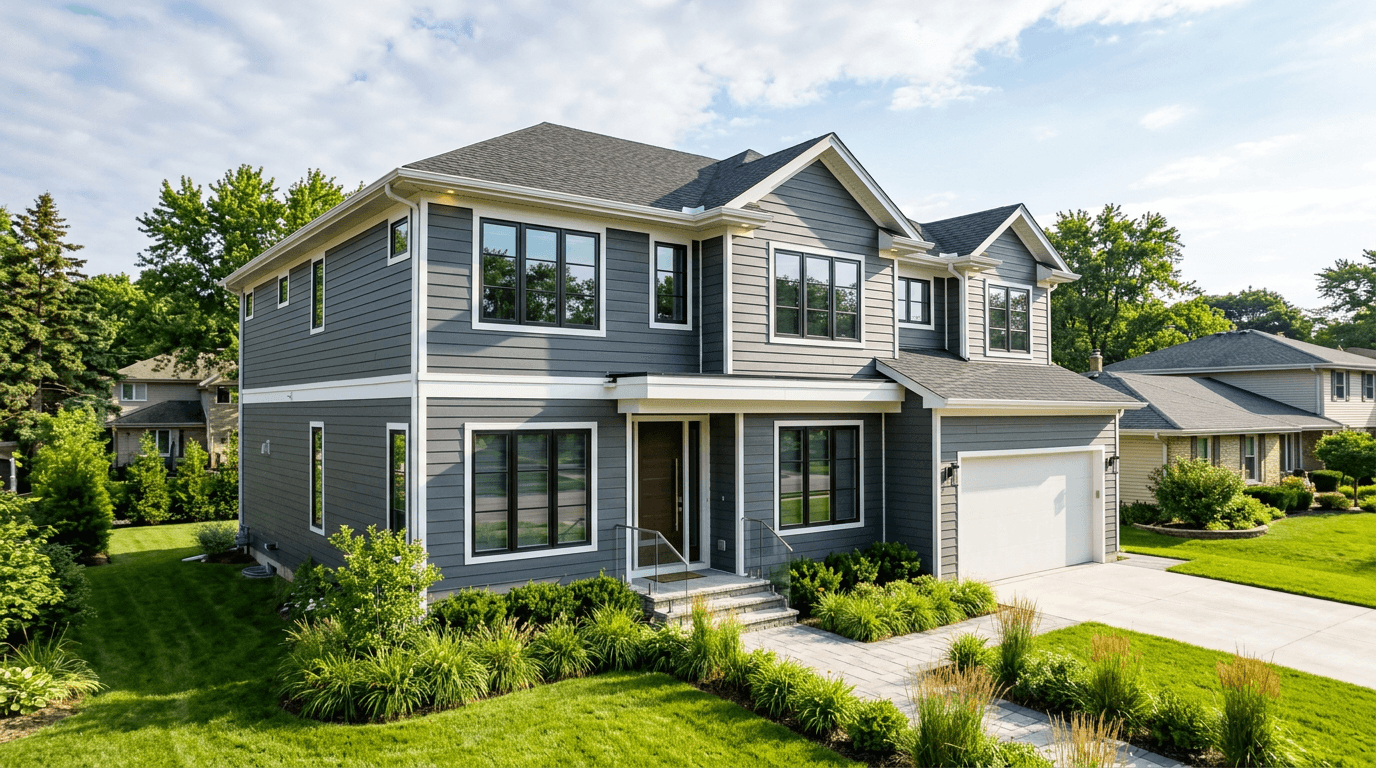
Siding Is Your Home's Thermal Envelope
Most homeowners think of siding as purely cosmetic — the "skin" of their home. In reality, siding is a critical component of your home's thermal envelope, working alongside insulation, windows, and roofing to regulate interior temperature.
Older or damaged siding allows air infiltration that undermines your insulation's effectiveness, forcing your HVAC system to work harder. Upgrading to energy-efficient siding can reduce heating and cooling costs by 10–20% depending on your current condition.
Insulated Vinyl Siding
Energy impact: High Cost: $$ Lifespan: 30–40 years
Insulated vinyl siding has a rigid foam insulation permanently bonded to the back panel. This eliminates air gaps between the siding and sheathing that traditional vinyl leaves open.
Performance benefits:
- R-value of 2.0–3.5 (compared to R-0.6 for standard vinyl)
- Eliminates thermal bridging through studs
- Reduces exterior noise transmission by 40–45%
- Resists moisture penetration and won't rot, warp, or corrode
Best for: Budget-conscious homeowners who want meaningful energy improvement without premium pricing.
James Hardie Fiber Cement Siding
Energy impact: Medium-high (with proper installation) Cost: $$$ Lifespan: 50+ years
James Hardie HardiePlank is the gold standard for fiber cement siding and the most popular premium siding choice in the Midwest. While the material itself has a moderate R-value, its tight installation tolerances and compatibility with continuous insulation systems make it an excellent energy performer.
Performance benefits:
- Non-combustible — Class A fire rating
- Resistant to moisture, rot, and termites
- ColorPlus Technology finish resists fading and cracking for 15 years
- Compatible with HardieWrap weather barrier for continuous insulation
Why we recommend it: Culture Construction is a James Hardie Preferred Contractor. Our crews are factory-trained on their installation specifications, which is critical because improper installation voids the manufacturer warranty.
Pro tip: Pair James Hardie siding with a continuous rigid foam insulation layer (1/2" or 1") behind the panels. This combination can increase your wall system's R-value by 30–50% over existing conditions.
Engineered Wood Siding (LP SmartSide)
Energy impact: Medium Cost: $$–$$$ Lifespan: 30–50 years
LP SmartSide offers the warm aesthetic of real wood with engineered durability. The treated wood strand substrate resists moisture, fungal decay, and termites.
Performance benefits:
- Good dimensional stability in temperature swings
- Compatible with all common insulation strategies
- Lightweight — easier installation reduces labor costs
- Paintable in any color with excellent paint adhesion
Considerations:
- Requires periodic repainting (every 8–12 years)
- Lower impact resistance than fiber cement
- Warranty requires specific installation and finishing procedures
Free Roof Inspection — No Obligation
Culture Construction is GAF Master Elite certified and headquartered in Elmhurst, IL. Same-week inspections across DuPage, Cook, and Will County.
What About Traditional Vinyl?
Standard (non-insulated) vinyl siding is the most affordable option, but it provides minimal energy benefit. The hollow profile leaves air gaps against the sheathing, and thin panels offer negligible R-value.
If budget is the primary driver, insulated vinyl provides dramatically better energy performance for only 15–25% more than standard vinyl. We strongly recommend the upgrade.
How to Maximize Energy Savings
The siding material alone doesn't determine energy performance. The complete wall system matters:
- Add continuous insulation behind the siding — even 1/2" of rigid foam makes a measurable difference
- Seal all penetrations — outlets, hose bibs, vents, and window/door transitions are common air leak points
- Install a weather-resistive barrier (house wrap) properly — seams must be taped, and the barrier must integrate with window and door flashing
- Address the full envelope — siding improvements paired with attic insulation and window upgrades deliver compounding benefits
Get a Siding Assessment
Culture Construction evaluates your existing siding condition, identifies air infiltration points, and recommends the most cost-effective improvement strategy for your home and budget.