

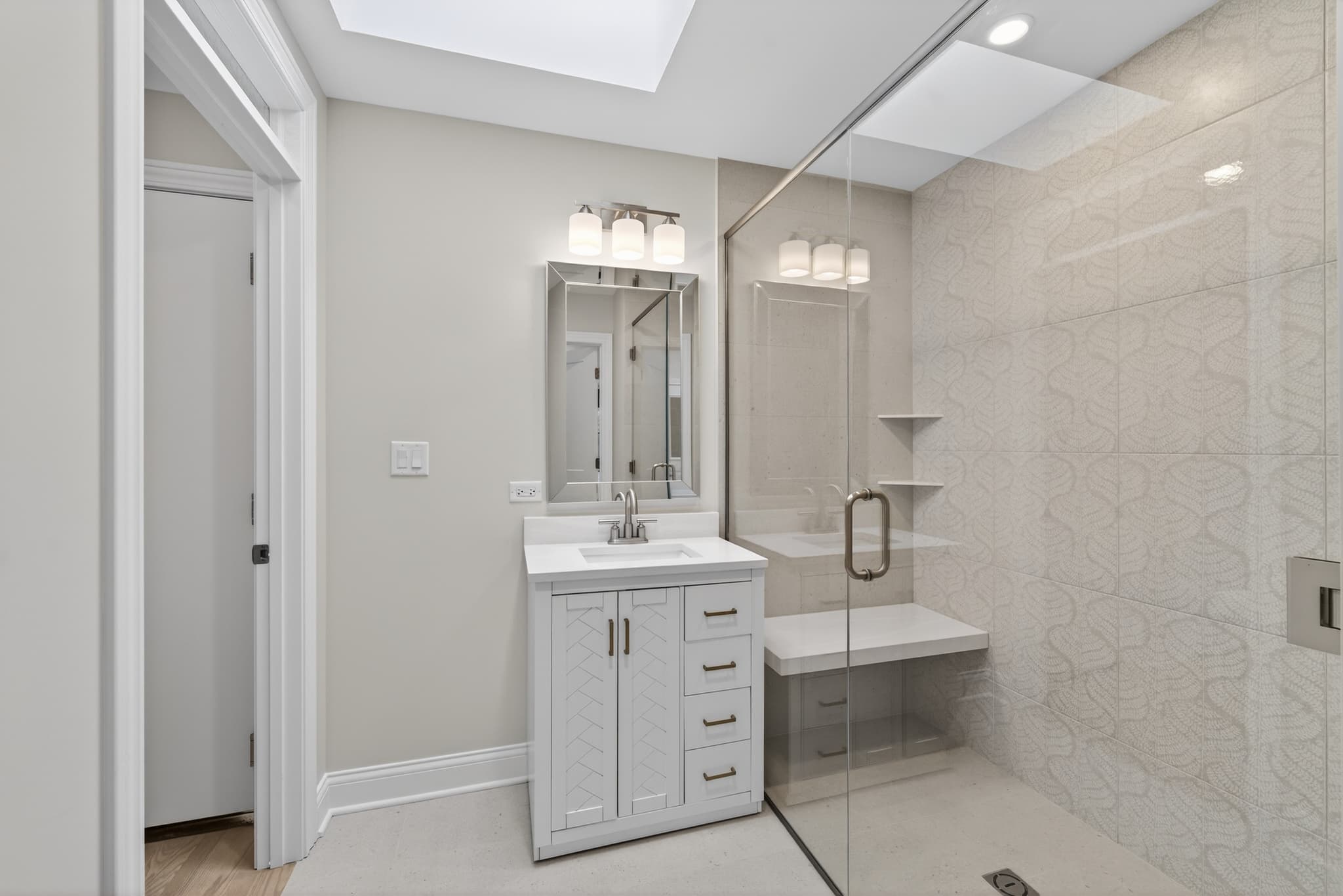
Tile is the design language of a bathroom. It covers more visible surface area than any other material — floors, walls, shower surrounds, backsplashes — and it sets the tone for the entire space. Get the tile right and a modest bathroom remodel looks polished. Get it wrong and an expensive one looks dated.
Here's what we're actually specifying and installing in Chicagoland bathrooms at Culture Construction right now — not what the design magazines are featuring in $500,000 penthouse bathrooms, but what works in real homes in Elmhurst, Naperville, Hinsdale, and the western suburbs.
Large-Format Porcelain Is the Default
The dominant trend in Chicagoland bathroom tile is large-format porcelain — 12x24, 24x24, and 24x48 inch tiles on both walls and floors. The appeal is practical: fewer grout lines means a cleaner look and less grout maintenance. In a shower, large-format tiles create a seamless, spa-like effect that smaller tiles can't match.
Most of the large-format porcelain we install imitates natural stone — marble veining, travertine textures, concrete finishes. The technology has gotten remarkably good. At arm's length, many porcelain tiles are indistinguishable from the stone they replicate, at one-third the cost and zero maintenance.
The most requested patterns right now are Calacatta-look (white with dramatic gray and gold veining), concrete-look (warm gray, matte finish), and travertine-look (earthy tones with subtle surface texture).
Cost: $5 to $15 per square foot for materials. Installation runs $8 to $14 per square foot — larger tiles require a flatter substrate, which sometimes means additional floor prep.
Zellige and Handmade Tiles for Accents
Zellige — a hand-cut, glazed Moroccan tile — has become the most requested accent tile in the western suburbs. Each tile has slight variations in color, surface, and edge, giving a wall the handcrafted character that factory-perfect tile lacks.
We see zellige most often in shower niches, behind vanities, and as a feature wall in powder rooms. The 2x6 or 2.5x8 inch format in a vertical stack pattern is particularly popular.
Cost is higher than standard tile — $15 to $35 per square foot for materials, and installation runs higher because the irregular edges require careful setting. But because it's typically used on a single wall or a small accent area, the total cost is manageable.
Other handmade tile styles gaining traction: clé tile's terracotta-look cement tiles for floors, and hand-painted decorative tiles for powder room feature walls.
Penny Round and Hex for Shower Floors
Small-format mosaic tiles — penny rounds, hexagons, and small squares — remain the standard for shower floors. The reason is practical: a shower floor needs to slope toward the drain, and small tiles conform to the slope more easily than large ones. The grout joints also provide better grip underfoot than a smooth large tile.
The current preference is for matte-finished mosaics in neutral tones — white, warm gray, or black. High-gloss penny tiles have lost ground because they show water spots and soap residue more visibly.
Cost: $8 to $25 per square foot for materials. Installation is comparable to standard tile.
Free Kitchen & Bathroom Remodel Estimate
Culture Construction is a veteran-owned, licensed Illinois general contractor serving Elmhurst and the greater Chicagoland area. Design-build kitchen and bathroom remodeling with a 10-year workmanship warranty.
Natural Stone as a Statement
Marble, travertine, and slate are less common as full-bathroom surfaces than they were a decade ago — porcelain replicas have absorbed much of that market — but natural stone still appears regularly in high-end master baths in Hinsdale, Burr Ridge, Oak Brook, and Lake Forest.
The most common natural stone application we install is a marble shower accent wall — one wall in a three-sided shower, paired with porcelain on the other two walls and the floor. This gives the bathroom the visual impact of natural stone at roughly one-third the cost and maintenance of a fully stone-clad shower.
Important: natural stone in a shower requires diligent sealing and a homeowner who understands the maintenance commitment. We have that conversation explicitly before specifying stone in any wet area.
Pattern Trends
Vertical stack bond (tiles aligned in straight vertical columns with no offset) has overtaken running bond (the traditional brick-like offset) as the most requested wall pattern. It reads as more contemporary and emphasizes the height of the wall.
Herringbone remains popular for floors and accent areas. It's visually interesting without being busy, and it works with both modern and traditional bathrooms.
Bookmatching — where adjacent tiles mirror each other's veining, creating a butterfly pattern — is a premium technique used with natural stone and high-end porcelain. When done well it's stunning. It requires a fabricator who can cut and sequence the tiles from the same slab.
Practical Advice
Three things we tell every homeowner during tile selection:
First, always see the tile in person before committing. Screen and catalog colors are unreliable. Visit a tile showroom and look at full sheets, not individual samples.
Second, buy 10 to 15% more than the measured quantity. Tiles break during installation, cuts create waste, and if you need a repair in five years, matching discontinued tile is often impossible.
Third, grout color matters as much as tile color. A contrasting grout (dark grout with light tile) makes the pattern prominent. A matching grout makes the tiles flow together. Neither is right or wrong, but the choice should be intentional.
Need help selecting tile for your bathroom remodel? Culture Construction's design-build approach means we help you choose materials — including tile, fixtures, and finishes — as part of the project, not as a separate service you have to coordinate yourself.