

Insights
Types of Roof Damage: How to Identify Hail, Wind, and Storm Damage
July 2, 2026
Why Identifying Damage Type Matters
Not all roof damage looks the same, and not all damage is covered the same way by insurance. Hail damage, wind damage, and impact damage each leave distinct signatures. Knowing what to look for — and what to document — is the first step toward a successful insurance claim or an accurate repair estimate.
Hail Damage
Hail is the leading cause of residential roof claims in Illinois. DuPage, Cook, Kane, and Will counties experience 3–6 significant hail events per year, with hailstones ranging from pea-size (0.25") to golf ball-size (1.75") or larger.
What Hail Does to Asphalt Shingles
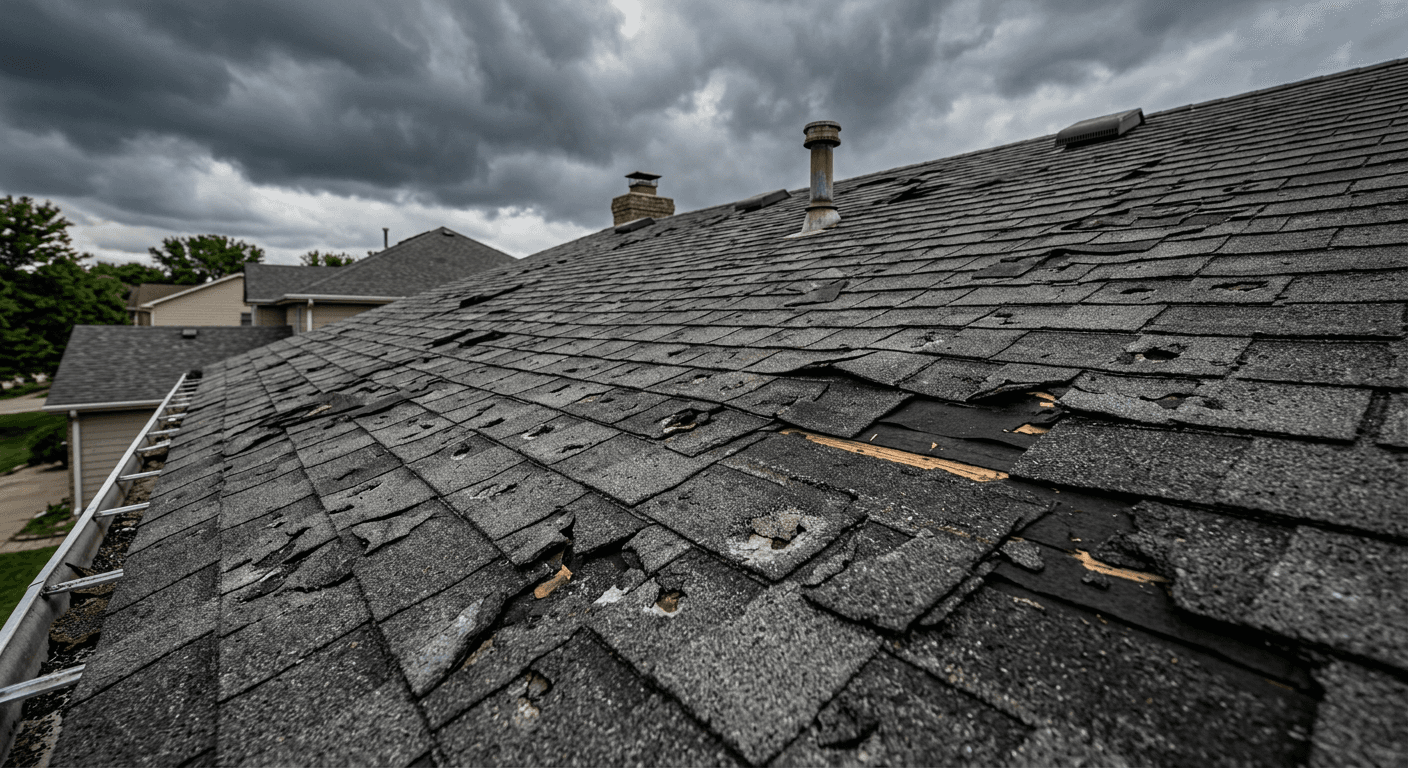
Hail impact dislodges the granule coating from asphalt shingles. Those granules are the UV protection layer — without them, the asphalt oxidizes and becomes brittle in 2–4 seasons. The damage is:
- Impact craters — circular depressions in the shingle surface, sometimes with a dark center where granules are missing
- Granule displacement — bare spots where the asphalt is exposed
- Soft spots — the underlying fiberglass mat is bruised; not always visible but detectable by touch
What Hail Does to Metal Components
Metal surfaces — gutters, downspouts, HVAC covers, garage doors, AC condenser fins — show hail impact as small dents. If these metal surfaces have dents, the roof almost certainly has impact damage too. Insurance adjusters often use metal denting as corroborating evidence for a shingle damage claim.
Signs of Hail Damage You Can See from the Ground
- Dark granules collecting in gutters or at downspout discharge points
- Dents visible on gutters or flashing
- Damaged screens or dented aluminum trim around windows
- Shingles with a peppered or speckled appearance (from missing granules)
The Hidden Problem with Hail
Hail damage is often invisible until it isn't — meaning the roof looks fine from a distance but is actually failing at the granule level. By the time leaks appear, the shingles have been compromised for 2–3 seasons and may be beyond repair. This is why post-storm inspections from a certified contractor matter even when you don't see obvious damage.
Wind Damage
Straight-line winds, derecho events, and thunderstorm gusts are common in the Chicago area from spring through fall. Illinois averages 20–30 wind events per year with gusts exceeding 60 mph.
What Wind Does to Roofs
Lifted and missing shingles: High winds create uplift pressure under shingles, particularly at eaves, rakes, and ridge lines. Shingles with a broken or degraded self-seal strip are most vulnerable. Missing shingles are the most obvious wind damage.
Creased and cracked shingles: Even shingles that didn't blow off may have been lifted far enough to crease. A creased shingle has a stress fracture in the fiberglass mat and will fail prematurely.
Flashing separation: Wind can pull flashing away from chimney walls, dormer walls, and roof penetrations — creating gaps that funnel water directly into the structure.
Ridge cap damage: Ridge caps take the full force of wind at the peak. Loose or missing ridge caps are extremely common after wind events and are one of the most common post-storm findings.
Signs of Wind Damage from the Ground
- Shingles on the ground or in the yard
- Visible gaps in the ridge cap line
- Lifted shingle edges visible along the eaves or rakes
- Visible flashing that's pulled away from chimney or dormer walls
Free Roof Inspection — No Obligation
Culture Construction is GAF Master Elite certified and headquartered in Elmhurst, IL. Same-week inspections across DuPage, Cook, and Will County.
Impact Damage
Impact damage comes from objects striking the roof — tree limbs, branches, debris carried by wind, or other objects. This is distinct from hail (which is small and widespread) and wind (which affects the whole roof system).
Tree and Branch Damage
A direct branch strike can:
- Puncture through shingles, underlayment, and decking
- Create a concentrated leak point at the impact site
- Damage structural rafters if the branch is large enough
- Dislodge adjacent shingles from the impact force
Even a small branch can strip granules across a 2–3 foot area and compromise shingles that weren't directly hit.
Debris Damage
In high-wind events, debris — lawn furniture, gravel from flat roofs, tree limbs — can strike residential roofs and create impact points that look similar to hail but are irregular in shape and distribution.
Structural and Moisture Damage
Ice Dam Damage
Ice dams form when heat escaping from the living space melts snow on the roof, which refreezes at the cold eaves. Water backs up under shingles and into the structure. Signs include:
- Water stains at the top of exterior walls
- Staining around ceiling light fixtures after a warm spell
- Damaged or stained drywall near exterior walls on upper floors
Moss and Algae
Algae creates dark streaks on roof surfaces (most visible on light-colored shingles). Moss holds moisture against shingles and accelerates deterioration. Neither is covered by insurance, but both indicate moisture management issues worth addressing.
Documenting Damage for an Insurance Claim
A well-documented claim gets approved faster and with fewer disputes:
- Date-stamp your photos — shoot from multiple angles immediately after the storm
- Photograph the storm itself — radar screenshots, social media weather reports from the day establish the event
- Photograph metal surfaces — dented gutters and AC covers corroborate shingle damage
- Don't repair before documentation — patch emergency leaks (tarping is fine) but don't replace materials before the adjuster inspection
- Get a contractor inspection first — a GAF Master Elite contractor's report carries weight with adjusters
Culture Construction provides free storm damage inspections across Elmhurst, DuPage County, Cook County, and the surrounding Chicagoland suburbs. We document damage, prepare reports for your adjuster, and manage the entire claims process.