

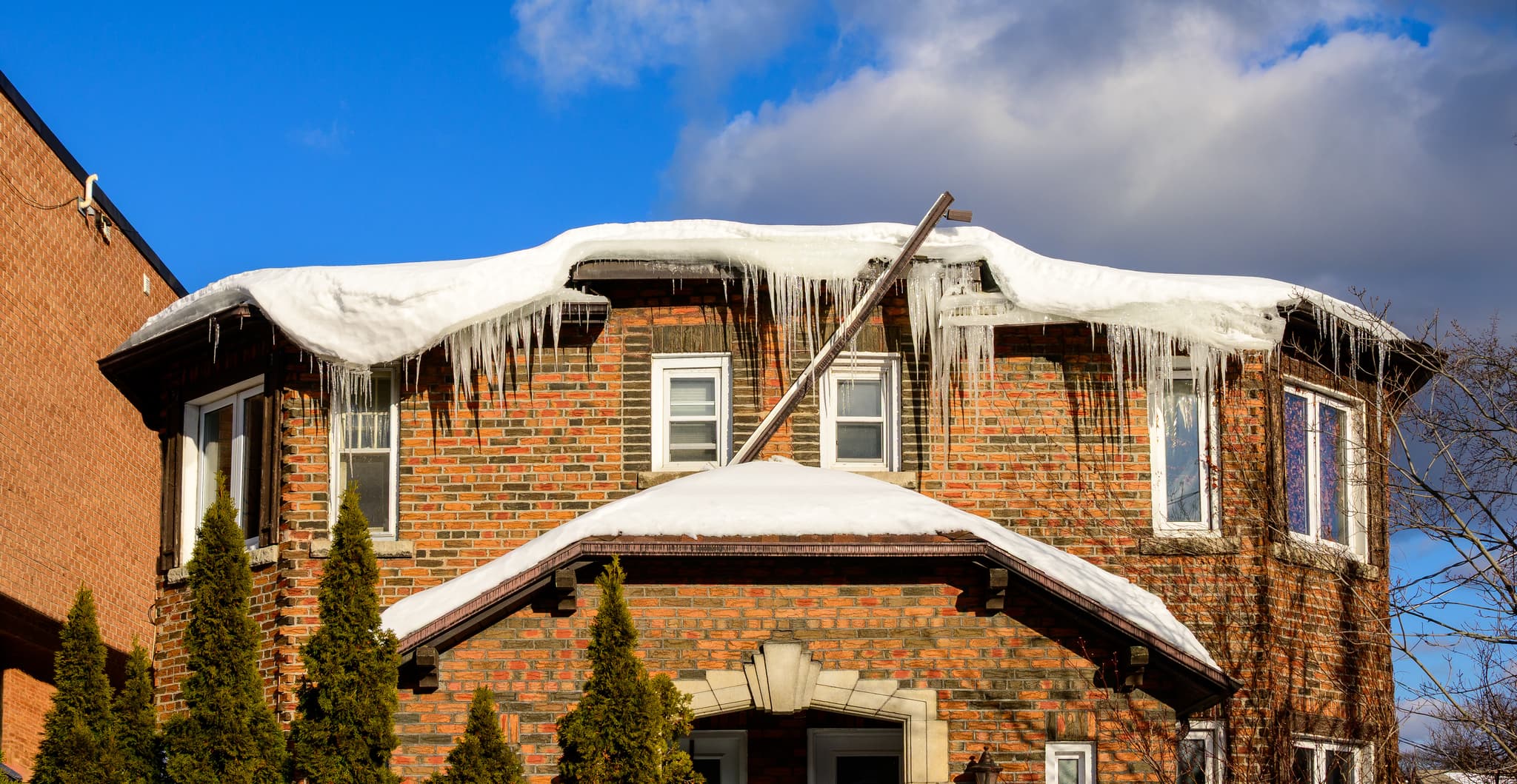
Every winter, Chicago-area homeowners watch icicles build along their eaves and think they look almost festive — right up until water starts staining the ceiling inside. Those icicles are often the visible sign of an ice dam, one of the most destructive and most preventable winter roof problems in the Midwest. Here's what most people get wrong: by the time you can see an ice dam, it's too late to prevent it. The work that actually stops ice dams — sealing, insulating, ventilating, and clearing — has to happen in the fall, before snow is sitting on your roof. Wait until December and your options shrink to reactive, expensive damage control. This is why we treat ice dam prevention as a fall project. Let's break down how they form and exactly what to do about it now.
What an Ice Dam Actually Is
An ice dam is a ridge of ice that forms at the edge of your roof and stops melting snow from draining off. The mechanism is straightforward once you see it:
- Snow sits on your roof. Normal for a Chicagoland winter.
- Heat escapes from your living space into the attic, warming the underside of the roof deck.
- That warmth melts the snow on the upper part of the roof — even when it's below freezing outside.
- The meltwater runs down toward the eaves, which are colder because they extend past the heated part of the house.
- At the cold eave, the water refreezes, building a dam of ice.
- Water backs up behind the dam, pooling under the shingles — and eventually finds its way inside, into your insulation, walls, and ceilings.
The root cause almost always traces back to the same thing: a warm attic. Which is exactly why the fix lives in the attic, not on the roof surface.
The Three-Part Fix (All Fall Work)
Stopping ice dams comes down to keeping your roof deck cold and uniform in temperature. That takes three things working together.
- Air sealing Before anything else, the gaps that let warm household air leak into the attic — around recessed lights, the attic hatch, plumbing stacks, and top plates — need to be sealed. Insulation slows heat transfer, but it doesn't stop air leaks. Sealing first makes everything else work better, and it's inexpensive.
- Insulation A properly insulated attic keeps household heat where it belongs. For our climate — northern Illinois sits in Climate Zone 5 — the U.S. Department of Energy target for attics is roughly R-49 to R-60. Many older Chicagoland homes were built to a lower standard (R-38 or less was a common older minimum), so there's often room to add. If your insulation looks thin, patchy, or compressed, it's likely underperforming.
- Ventilation Balanced attic ventilation flushes out warm, moist air and keeps the roof deck cold. Building code calls for roughly 1 square foot of net free vent area per 150 square feet of attic floor — or 1 per 300 when you have a properly balanced system — split evenly between intake vents at the soffits (low) and exhaust vents at the ridge (high). The balance is the part that matters: exhaust without enough intake, or vice versa, and the system doesn't move air the way it should. Get all three right and the roof deck stays cold, the snow stays put, and there's no meltwater to refreeze at the eaves. Free Attic & Ventilation Assessment — No Obligation Ice dams are an attic problem before they're a roof problem — and diagnosing them takes a trained eye. Culture Construction is GAF Master Elite certified and based in Elmhurst at 324 N York St. We'll assess your insulation, ventilation, and roof condition across DuPage, Cook, and Will County, and tell you exactly what's putting you at risk before winter. Get a Free Assessment → · Call (234) CULTURE
Two More Fall Steps That Help
Clean your gutters. Clogged gutters give ice a place to start building and block what little drainage you'd otherwise get during a thaw. Clear them once the leaves are down but before the first freeze. (Our fall maintenance checklist covers this in full.) Ask about ice-and-water shield if you're re-roofing. If a roof replacement is already on your radar, this is the moment to do it right. A self-adhering ice-and-water shield membrane installed along the eaves is a code-required protection in our area — it creates a waterproof barrier exactly where ice dams try to push water under the shingles. Getting a new roof installed in the fall means this protection is in place before winter, not after.
Free Roof Inspection — No Obligation
Culture Construction is GAF Master Elite certified and headquartered in Elmhurst, IL. Same-week inspections across DuPage, Cook, and Will County.
What NOT to Do When an Ice Dam Forms
If a dam does form this winter, resist the urge to fix it aggressively:
- Don't chip or hammer at the ice. You'll almost certainly damage the shingles underneath.
- Don't send someone up on an icy roof. It's genuinely dangerous.
- Don't ignore an active interior leak. Get it assessed — trapped water leads to mold and rot.
And watch for storm-chasers. After the first big winter storm, out-of-town crews canvass Chicago-area neighborhoods offering quick "ice dam removal." Be cautious with anyone who shows up uninvited and pressures you to sign immediately, regardless of price. Work with a certified local contractor who'll be here after the ice melts.
Do the Prevention Now — Not the Repair Later
Ice dam damage — soaked insulation, stained ceilings, rotted decking, mold — costs far more to repair than the fall work that prevents it. Air sealing, insulation, balanced ventilation, and clean gutters aren't glamorous, but they're what keeps the water out when it counts. Culture Construction is Elmhurst's veteran-owned, GAF Master Elite certified contractor, serving homeowners across DuPage, Cook, and Will County. If you're not sure whether your attic is setting you up for ice dams this winter, let us take a look while there's still time to fix it. Schedule your free assessment → or call (234) CULTURE.
Related Posts
- Your Fall Roof Maintenance Checklist for Chicagoland Homeowners
- Book Now, Roof Before Winter: Why August Is the Smartest Month to Replace Your Roof
- How to Choose the Right Roofing Material for Midwest Weather